
Modular home builders in Gilboa, NY work through a regional dealer network rather than a single in-town shop, so your price, timeline, and finish-trade options depend heavily on which builder territory covers your lot. This guide breaks down 2026 turnkey pricing, New York building codes, and financing rules specific to rural Schoharie County parcels, plus what actually happens once your module lands on the foundation. If you're already planning the roofing, siding, flooring, or kitchen work that follows delivery, that's where our crews at Fit and Finish Construction come in.
How Much Does a Modular Home Cost in New York?
Buyers researching modular home builders in Gilboa, NY typically see turnkey prices between $140 and $220 per square foot in 2026, depending on finishes and site conditions. That figure covers the factory-built module, delivery, and finish work, not just the base unit price many builders quote upfront.
Before comparing bids, it helps to understand what makes up that turnkey price and where costs tend to creep.
What You Actually Pay For
A turnkey modular home price in New York breaks into three rough buckets:
- Base module (45-55% of total): factory construction, insulation, framing, and interior shell work done off-site.
- Delivery and set (10-15%): trucking and crane work to place the module on your foundation.
- Site preparation (30-40%): foundation, grading, utility hookups, and local finish trades who complete the roof tie-in, siding, and interior connections after the module lands.
Schoharie County's hilly terrain can push that site-prep share higher than the statewide average, especially on wooded or sloped lots near Gilboa.
Cost by Home Size
Per-square-foot cost drops as home size increases, because foundation and delivery expenses stay relatively fixed regardless of square footage. A 1,000-square-foot starter modular home often costs more per square foot than a 3,000-square-foot custom build, even though the total price is lower.
| Home Size | Estimated Turnkey Range | Est. Price per Sq Ft |
|---|---|---|
| 1,000 sq ft | $180,000 – $220,000 | $180-220 |
| 1,800 sq ft | $270,000 – $340,000 | $150-190 |
| 2,500 sq ft | $350,000 – $450,000 | $140-180 |
| 3,500 sq ft | $470,000 – $600,000 | $135-170 |
These are directional ranges for 2026. Local site conditions and finish selections can move numbers in either direction.
Hidden Costs on Rural Schoharie County Lots
Rural Schoharie County sites carry a few surprises that catch first-time buyers off guard:
- Rock excavation is common on hillside lots and can add several thousand dollars if blasting or extended digging is needed to set a foundation.
- Narrow roads and low bridges near Gilboa sometimes require delivery surcharges for specialized routing or a smaller carrier truck.
- Well and septic installation, required on most rural parcels without municipal hookups, often runs $15,000-$30,000 combined and isn't always included in a builder's base quote.
Ask every builder explicitly whether these rural delivery costs are in their number or billed separately. In our own project history finishing modular builds across Schoharie County, wooded Gilboa lots have consistently needed a larger site-prep contingency than flatter Capital Region parcels, so budget accordingly before you sign a contract.
How Modular and Manufactured Homes Differ
Modular homes are built to the same New York State Uniform Fire Prevention and Building Code that applies to site-built houses, while manufactured homes are built to a separate federal HUD code. This distinction matters directly for a Schoharie County buyer: modular homes on permanent foundations are classified as real property, which affects zoning approval, property tax treatment, and resale comparisons with neighboring stick-built homes.
| Feature | Modular Homes | Manufactured Homes |
|---|---|---|
| Building code | NYS Uniform Fire Prevention and Building Code | Federal HUD Code (24 CFR Part 3280) |
| Property classification | Real property (on permanent foundation) | Can be personal property depending on foundation |
| Typical financing | Conventional mortgage | Chattel loan or manufactured-specific product |
| Appraisal method | Compared to local site-built sales | Manufactured-housing valuation approach |
Manufactured homes can sometimes be classified as personal property depending on foundation type, which can complicate both local zoning review and conventional financing. For the official federal construction standard, see HUD's Office of Manufactured Housing Programs.
New York Building Codes and Permits for Modular Homes
Every modular home installed in New York must carry an Insignia of Approval, a state-issued seal confirming the factory module passed inspection by a certified Third Party Inspection Agency before it ever leaves the plant. That insignia covers the module's construction, but it does not replace your local building permit.
Gilboa and the surrounding Schoharie County towns still require a standard local building-permit process covering the foundation, septic, electrical hookup, and final occupancy inspection. Budget time for both the state insignia paperwork and your town's permit review, since they run on separate timelines. For current code authority details, review the New York Department of State Division of Building Standards and Codes.
How the Modular Home Building Process Works
Most buyers move through three practical phases: planning and site prep, factory construction and delivery, and final on-site finishing before move-in.
Land, Soil, and Site Access Planning
Before any module leaves the factory, your site needs a soil and topography check to confirm it can support the chosen foundation type. This step matters more in Schoharie County than in flatter parts of the state, since rural driveway access and delivery-truck clearance can be genuinely limiting factors.
A narrow or steep driveway may require the builder to bring in a smaller crane or reroute the delivery path entirely. Walk your access road with the builder's site team early. It's far cheaper to solve an access problem on paper than after a truck is stuck on your hill.
Design Approval, Factory Construction, and On-Site Finishing
Once your design is approved, factory construction of the module typically takes several weeks under climate-controlled conditions, which limits weather delays compared to fully site-built framing. Local trades then handle foundation work, utility tie-ins, and final finishing after the module arrives.
This is also where your finish trades matter most. Once your module is set, local crews handle the roof tie-in, siding, interior flooring, and kitchen details that turn a shell into a finished home. Fit and Finish Construction handles exactly these phases for Schoharie County homeowners, from roof installation and siding installation to flooring installation and custom kitchen remodeling. You can browse examples of completed finish-out work in our project gallery.
Municipal inspectors review the completed site work, electrical, plumbing, and structural tie-in, before issuing a certificate of occupancy. That final inspection is what legally allows you to move in, so factor local inspector scheduling into your overall timeline.
Modular Home Builders by Region Serving Gilboa and Schoharie County
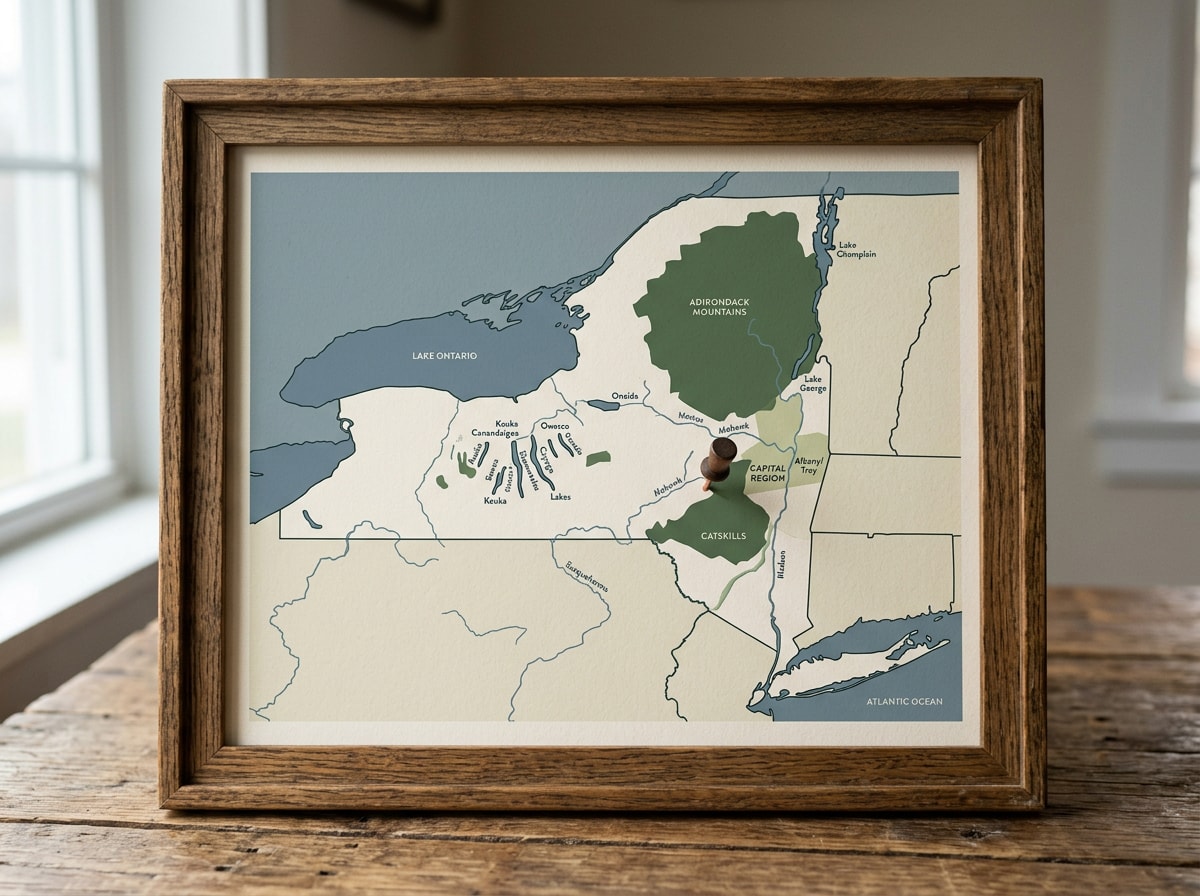
New York modular builders operate on a regional dealer-and-delivery model rather than a single statewide network. For Gilboa buyers, two regions realistically serve the area: the Capital Region/Adirondacks network to the northeast, and Central New York builders reaching in from the west.
Capital Region and the Adirondacks
The Capital Region is the closest modular builder network to Gilboa, with Albany-area dealers typically 45-60 miles away and reasonable same-day delivery routes down into Schoharie County. Builders and dealers in this corridor serve customers stretching north into the Adirondacks and west toward Cobleskill, NY and Richfield Springs.
As of 2026, lead times from order to factory completion in this region are running roughly 12-16 weeks, though that can extend during peak spring building season. Manufacturers commonly supplying this corridor include established Pennsylvania- and New York-based module builders whose dealer networks reach Capital Region customers. Confirm current lead times directly, since they shift with order volume.
Central New York
Central New York dealers, centered around the Syracuse and Finger Lakes area, offer a secondary option for Schoharie County buyers, generally 90-120 miles from Gilboa. This region tends to carry a wider mix of state-code modular and HUD code manufactured options, which can be useful if you're comparing both product types before deciding.
Delivery costs from Central New York builders to Gilboa run somewhat higher given the added distance, so weigh that against any pricing advantage before committing. If your parcel sits closer to Cooperstown, NY or Oneonta, NY, both corridors may realistically compete for your project.
How to Compare Quotes from Modular Home Companies
A useful bid checklist confirms, line by line, exactly what a quote does and doesn't cover before you compare prices. The most common hidden exclusions are:
- Site work and grading
- Well and septic installation
- Permit fees
- Appliance packages
- Finish trades (roofing, siding, flooring, interior millwork)
Ask every builder to itemize these separately rather than bundling them into one number. Request a written breakdown showing base module price, delivery and set, foundation, utility connections, and finish trades for each bid. Comparing two quotes that define "turnkey" differently is the single most common mistake Gilboa-area buyers make, and it can hide a real price difference of $20,000 or more. Get a free estimate once you have a bid in hand and want a second set of eyes on the finish-trade line items.
Financing a Modular Home in New York
A modular home placed on a permanent foundation finances essentially like any site-built house in New York, using standard mortgage products rather than specialized chattel loans.
Conventional Mortgage Options for Modular Homes
Modular homes built to the New York State Uniform Code and set on a permanent foundation are generally eligible for conventional financing under Fannie Mae and Freddie Mac guidelines, provided the home is classified as real property. Lenders apply the same appraisal standard used for site-built homes, comparing your modular home against similar local sales rather than using manufactured-housing valuation methods.
This real-property classification is exactly why the modular-vs-manufactured distinction covered earlier matters so directly for financing. Review Fannie Mae's Selling Guide section on factory-built housing for the full underwriting criteria before applying.
Down Payment and Closing Costs
Expect closing costs in the typical 2-5% of loan amount range, similar to any conventional mortgage, plus a construction contingency reserve many lenders require to cover unexpected site costs during the build phase. Down payment requirements generally mirror conventional site-built mortgages, often 5-20% depending on your loan program and credit profile.
Construction-to-permanent loans, common for modular projects, may also hold back a contingency fund until final inspection and certificate of occupancy are complete. Talk with your lender early so your contingency reserve doesn't catch you short at closing, and loop in your finish-trade contractors so their invoices line up with the draw schedule.
Frequently Asked Questions
How Long Does It Take to Build a Modular Home?
Most modular homes take 4-6 months from order to move-in, including factory construction, delivery, and on-site finishing, though this can extend near Gilboa during winter months when frozen ground slows foundation work. Factory construction itself usually takes just a few weeks under controlled conditions. For broader industry timeline data, see the Modular Building Institute's code and construction resources.
Are Modular Homes Cheaper Than Stick-Built Homes in New York?
Modular homes typically run 10-20% cheaper than comparable stick-built construction in New York, mainly due to factory efficiency and reduced weather delays. That savings margin tends to be wider in upstate markets like Schoharie County than in high-cost downstate areas, where land and labor costs dominate the overall budget regardless of construction method.
Do Modular Homes Hold Their Value in New York?
A modular home set on a permanent foundation and classified as real property appraises and appreciates like any comparable site-built home in its local market. This differs from HUD-code manufactured homes on leased land, which often depreciate similarly to vehicles rather than appreciating with the local real estate market.
What's the Difference Between a Modular Home and a Manufactured Home?
Modular homes are built to the New York State Uniform Code, the same code site-built homes follow, and are classified as real property once set on a permanent foundation. Manufactured homes follow a separate federal HUD code and can be classified as personal property depending on how they're installed.
Do I Still Need a Local Building Permit If My Modular Home Has a State Insignia?
Yes. The state Insignia of Approval covers the factory-built module, but your town still requires a standard local permit for the foundation, septic, electrical hookup, and final occupancy inspection.
Who Finishes a Modular Home After It's Delivered?
Local trades complete the roof tie-in, siding, interior flooring, and kitchen finishes after the module is set on its foundation. If you need that finish-out work in the Gilboa area, contact Fit and Finish Construction to discuss your project scope.