
Builders asphalt Cooperstown, NY work means fighting one enemy above all else: freeze-thaw cycles that crack and heave pavement faster than almost anywhere else in the state. Whether you're patching a single pothole or planning a full driveway replacement, knowing your repair options and realistic 2026 costs puts you in control before a contractor ever quotes the job. This guide breaks down the repair methods, the replacement process, and the material choices that actually hold up through an Otsego County winter.
At Fit & Finish Construction, our crews see the same failure pattern on driveways from Cooperstown to Oneonta almost every spring: hairline edge cracking first, then full alligatoring by the following winter if nothing gets done about it. That pattern is exactly why the repair method you choose matters as much as when you choose it.
Precision Builders Asphalt Repair Services in Cooperstown, NY
Cooperstown winters are hard on pavement, and the right fix depends on how far the damage has already progressed. A single-family driveway doesn't need the same approach as a small commercial lot or HOA parking area. Some problems call for a quick patch. Others need a full rebuild.
Local builders asphalt contractors in Cooperstown, NY typically start with the least invasive repair that will actually hold. They only move up the scale once the damage warrants it.
The four categories below cover most of what a Cooperstown asphalt crew handles, from a lone pothole to a failing sub-base.
Pothole Repair
Potholes form when water seeps into cracked pavement, freezes, and expands, breaking the asphalt apart from underneath. Infrared repair reheats the existing surface and blends in new material for a seamless fix. Cut-and-patch removes the damaged section entirely and replaces it with fresh asphalt.
Clean, vertical-cut edges matter because they give the new patch something solid to bond to. That's often the difference between a pothole repair that lasts one season and one that lasts five.
Crack Sealing
Hairline cracks look harmless, but they're the most common entry point for moisture into an asphalt driveway. Once water gets below the surface, freeze-thaw cycling pries the crack wider with every cold snap.
Crack sealing uses hot, rubberized sealant that flexes with temperature swings instead of cracking again. It slows moisture damage and buys years before a full patch or repair becomes necessary. It's cheap insurance against a much larger bill later.
Drainage Correction
Standing water is one of the fastest ways to destroy a driveway's sub-base, because saturated soil loses the load-bearing strength that asphalt depends on. Poor grading or clogged edges let water pool instead of running off, softening the base layer until cracks and potholes spread across the whole surface.
Federal guidance on pavement design backs this up directly: the thickness of a pavement's subbase layer depends on project-specific factors such as water storage requirements, traffic loads, subgrade soils, and the need for frost heave protection . Get the drainage and base wrong, and no amount of surface asphalt will save the driveway.
Drainage correction, whether that means regrading, adding a swale, or installing edge drains, addresses the problem at its source instead of patching the symptoms. Left alone, standing water damage tends to come back in the same spot year after year.
Asphalt Milling & Removal
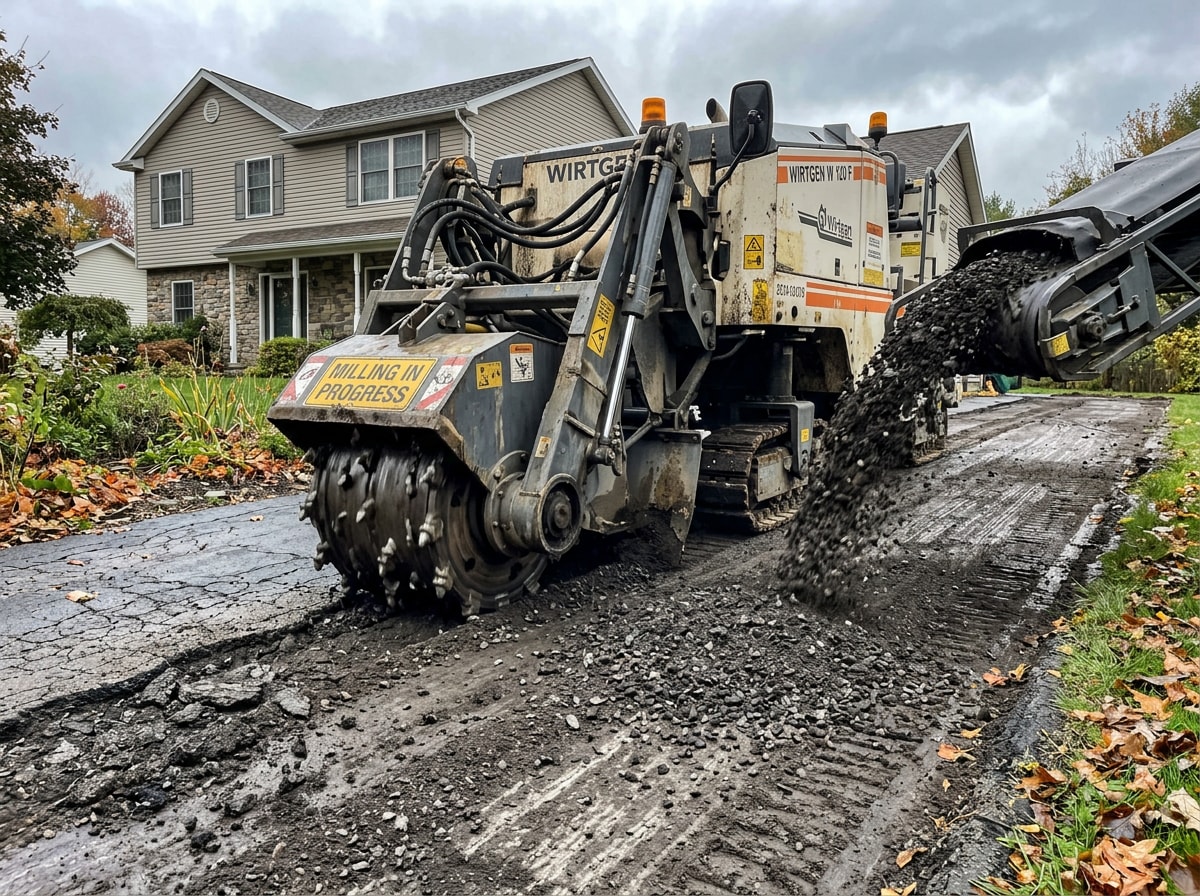
Patching only works when the base underneath is still sound. When a driveway shows severe rutting, alligator cracking, or structural failure spread across a large area, milling off the top layer (or removing the asphalt entirely) becomes the more honest fix.
Milling grinds down the damaged surface so a new layer can bond properly. Full removal is reserved for driveways where the sub-base itself has failed and patching would just mask a deeper problem.
Driveway Asphalt Removal & Replacement
Repair makes sense when damage is isolated. A driveway that's cracked, rutted, or settling across its entire surface is usually past the point where patching pays off.
Full removal and replacement means tearing out the old asphalt, correcting the base, and building a new driveway from the ground up, not just resurfacing over existing problems the way an overlay would. This route costs more upfront than a repair, but it resets the clock on the driveway's lifespan instead of layering fresh material over a foundation that's already failing.
Planning a project this size works the same way as any major exterior renovation: scope, timeline, and sequencing decided before anyone breaks ground. Our project management guide for residential construction walks through that planning process in more detail if you're weighing a full rebuild against a repair.
Anyone comparing contractors for a rebuild of this size can also look at completed project examples or request a free estimate to get a firm scope before committing.
2026 Cooperstown, NY Driveway Cost and Material Guide
Cost is usually the first question Cooperstown homeowners ask, and the honest answer depends on driveway size, base condition, and material choice. A typical two-car asphalt driveway in Otsego County (roughly 600 to 800 square feet) tends to run higher than national averages, mainly because of the extra base depth needed to survive freeze-thaw winters here.
Most asphalt quotes in Cooperstown, NY include excavation, base material, drainage work, and the surface asphalt as separate line items. It's worth asking for that breakdown upfront rather than a single lump sum.
Here's how the three common driveway materials stack up for this climate:
| Material | Upfront Cost | Typical Lifespan | Maintenance Needs |
|---|---|---|---|
| Asphalt | Higher | 15–20 years with sealcoating | Reseal every 2–3 years |
| Gravel | Lowest | Ongoing, no fixed lifespan | Regrade and add stone yearly |
| Oil-and-stone | Mid-range | Shorter than asphalt | More prone to raveling in heavy winters |
For a typical two-car Cooperstown driveway, asphalt generally costs more than gravel to install but less over a 20-year span once gravel's ongoing upkeep is factored in. That lifespan estimate isn't a guess: conventional pavement in a cold climate typically runs about 15 years before it needs major work, with porous or better-built sections lasting well beyond that , which lines up with why a well-built, properly based asphalt driveway in Otsego County tends to land at the higher end of that 15 to 20 year range.
Base depth is the real lever here, not just the surface mix. Engineering guidance from the asphalt industry is blunt about it: frost heave is prevented by ensuring the thickness of non-frost-susceptible material exceeds the normal depth of frost penetration for the region. A thin base fails faster regardless of how good the surface asphalt looks on day one.
For homeowners weighing an asphalt vs. gravel driveway decision, the real deciding factor is usually how long you plan to own the property versus how much annual maintenance you're willing to do yourself. Homeowners in nearby Oneonta face the same base-depth math, since both towns sit in the same frost zone.

How to Vet a Local Builders Asphalt Contractor in Cooperstown, NY
Cooperstown has no shortage of paving companies listed online, but not all of them carry the same base-prep standards. Before signing a contract, confirm these five things:
- Licensing and insurance. Ask for proof of liability coverage and workers' comp before any crew sets foot on the property.
- Local references. A contractor who's worked driveways in Cooperstown, Oneonta, or Cobleskill understands the local frost depth; one from a warmer region may not.
- Itemized estimate. Excavation, base material, drainage, and surface asphalt should each appear as separate line items, not one bundled number.
- Stated base depth. Ask what base thickness they're installing and why. A vague answer is a warning sign.
- Written warranty terms. Get the warranty length and what it actually covers (material, labor, or both) in writing before work starts.
A free estimate is the easiest way to see how a contractor answers these questions before you commit to anything.
FAQ
What Causes Asphalt to Crack and Deteriorate in NY?
Asphalt cracks in New York mainly because of freeze-thaw damage: water seeps into tiny gaps, freezes, expands, and widens the crack with every cold cycle. Heavy vehicle loads and constant UV exposure add to the wear. New York State suffers from freeze-thaw cycles in the spring that cause significant damage to local pavements , which is why deterioration tends to show up faster here than in warmer states.
How Long Does Asphalt Paving Repair Last?
As a rule of thumb, a well-done patch on a sound base lasts five to eight years. Repair lifespan depends on the severity of the original damage, which method was used, material quality, and how well the driveway is maintained afterward. Patch durability drops sharply when the underlying base has its own problems.
What Is the Best Material for a Residential Driveway in New York?
Asphalt is the most common recommendation for a residential driveway in New York because it flexes slightly instead of cracking under freeze-thaw stress, unlike more rigid materials. Compared with concrete, asphalt also costs less to repair and reseals easily, which makes it a practical choice for this climate.
Do I Need to Maintain My Driveway After Installation?
Yes. A new asphalt driveway still needs upkeep. Most contractors recommend sealcoating every two to three years, along with prompt crack filling whenever hairline cracks appear, since catching them early is far cheaper than letting them turn into potholes. Consistent maintenance is what separates a driveway that lasts fifteen years from one that lasts thirty.
What Is the Best Material for Steep Driveways?
Steep driveway material choice depends on grade and drainage needs. Gravel or crushed stone offers good traction but needs regular topping up, while permeable pavers manage runoff well on slopes. Asphalt still performs reliably on moderate grades and is often the lower-maintenance option when the slope isn't extreme.
Do I Need a Permit to Replace My Driveway in Cooperstown, NY?
It depends on the municipality and whether the work affects drainage, right-of-way, or curb cuts. Many towns only require a permit when the driveway's footprint, grading, or connection to a public road changes. Check with the local building department before work starts rather than assuming either way.
This guide is maintained by the team at Fit & Finish Construction, who coordinate exterior and driveway-related project work for homeowners across Cooperstown, Oneonta, Cobleskill, and the surrounding Otsego County area. Have a specific driveway or paving question? Get a free estimate and we'll walk through the scope with you directly.