
Concrete demolition contractors in Oneonta, NY field a surge of calls every spring, once freeze-thaw cycles finish off the driveways and patios that barely survived winter. Before you request quotes, you need straight numbers on cost, permits, and what the job actually involves. This guide gives you all three, starting with the short version.
Key Takeaways
- Cost: Residential concrete removal in the Oneonta area commonly runs in the $3-$10 per square foot range, with access and disposal distance moving the number more than slab size does.
- Timeline: A small slab or walkway is often a one-day job; a full driveway can take two to three days.
- Permits: The City of Oneonta requires a demolition permit for structures over 144 square feet under Chapter 94 of its municipal code, and similar rules apply in the surrounding townships.
- Biggest cost driver: Truck access and haul distance to a disposal site, not just the square footage of the slab.
- Ready to compare real numbers for your property? Get a free estimate before you commit to a contractor.
How Much Does Concrete Demolition Cost in Oneonta, NY?
Pricing for concrete removal depends on slab thickness, reinforcement, access, and disposal distance. National remodeling cost guides generally put concrete removal in the $2-$8 per square foot range, but that figure doesn't account for a rural market like Otsego County, where fewer crews and disposal sites tend to push pricing a bit higher.
The ranges below are general planning figures, not a quote. Treat them as a starting point for budgeting, not a guarantee.
| Project Type | Typical National Range | General Local Estimate |
|---|---|---|
| Driveway | $2-$6/sq ft | $4-$9/sq ft |
| Patio | $3-$7/sq ft | $4-$10/sq ft |
| Slab (general) | $2-$8/sq ft | $3-$9/sq ft |
| Sidewalk | $3-$6/sq ft | $4-$8/sq ft |
What Pushes the Price Up or Down
Five factors move a quote more than anything else:
- Slab size and thickness — thicker concrete takes longer to break and haul.
- Reinforcement — rebar or wire mesh adds cutting time.
- Site access — a driveway behind a narrow gate with no truck access costs more than one with open street frontage.
- Haul distance — how far the crew has to drive debris to a disposal or recycling site.
- Disposal fees — some contractors bundle dump fees into the quote, others bill separately.
Always ask whether hauling and dump fees are included in the number you're given, since that single line item explains most of the spread between quotes on the same job.
Request a free estimate to get pricing based on your actual property instead of a general range.
Do You Need a Permit for Concrete Demolition in Oneonta?
This is where a lot of homeowners get surprised. Oneonta tightened its demolition rules in 2023: Chapter 94 of the city code requires a demolition permit from the Code Enforcement Office for any structure removal, and the city specifically expanded enforcement to smaller structures over 144 square feet, not just full building teardowns. A standalone slab removal is usually treated differently than a structure, but the permit question still needs to be confirmed before work starts, since rules vary between the City of Oneonta, the Town of Oneonta, and surrounding Otsego County municipalities.
A pre-demolition asbestos survey is also required under New York State Department of Labor Code Rule 56 for many projects, even residential ones. A reputable contractor builds this check into the initial site visit rather than leaving it for you to track down. If you're unsure which rules apply to your address, the local code enforcement office can confirm requirements before you schedule anything.
Why Hiring a Professional Concrete Demolition Contractor Matters
Breaking up a slab with a rented jackhammer looks simple until you hit buried rebar or a utility line you didn't know was there. On a driveway tear-out we handled on Oneonta's west side, the crew found an electrical conduit feeding a detached garage sitting just a few inches under the slab, exactly the kind of hazard a proper utility sweep is designed to catch before the first strike.
Expertise and Experience
A seasoned crew reads a slab before they ever swing a breaker, checking for rebar, wire mesh, and thickness variations that change the right breaking method. An established contractor should be able to point to a mix of past work, driveways, patios, walkways, even commercial flooring, as proof they can handle whatever your property throws at them. You can browse examples of completed work on our projects page.
Safety First Approach
Before any concrete comes up, a professional crew inspects the site, locates utilities, and sets up dust and debris control. Concrete cutting and breaking generates fine silica dust, which falls under OSHA's Respirable Crystalline Silica standard for construction, which requires employers to limit worker exposures to respirable crystalline silica and to take other steps to protect workers . That standard sets specific requirements for dust suppression and worker protection, details most weekend DIY projects never account for.
What Residential Concrete Demolition Covers
Residential concrete demolition is the controlled removal of hardened concrete, driveways, patios, walkways, slabs, and steps, usually to prepare for replacement or a new landscaping plan. It's narrower in scope than commercial demolition, but it still requires the right equipment and a disposal plan.
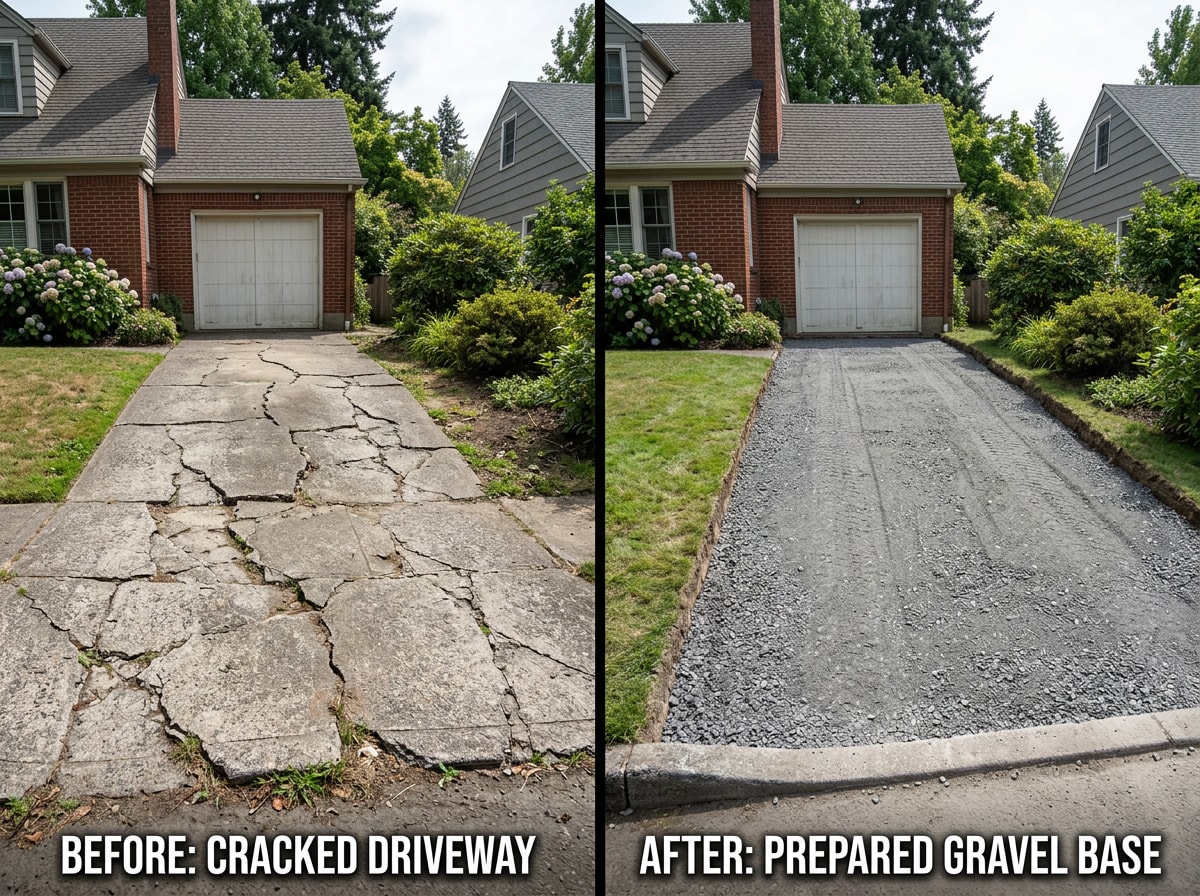
Driveway removal is one of the most requested jobs in this region, often triggered by winter freeze-thaw cracking that worsens year over year. Patio demolition tends to come up before a backyard remodel, while sidewalk and slab removal projects are usually driven by settling, trip hazards, or drainage problems around a foundation.
Step-by-Step: What Happens During a Concrete Demolition Project
A typical project follows roughly the same sequence regardless of scale:
- Site assessment — the contractor confirms scope and checks whether a demolition permit applies.
- Utility location — crews mark buried lines before any equipment moves in.
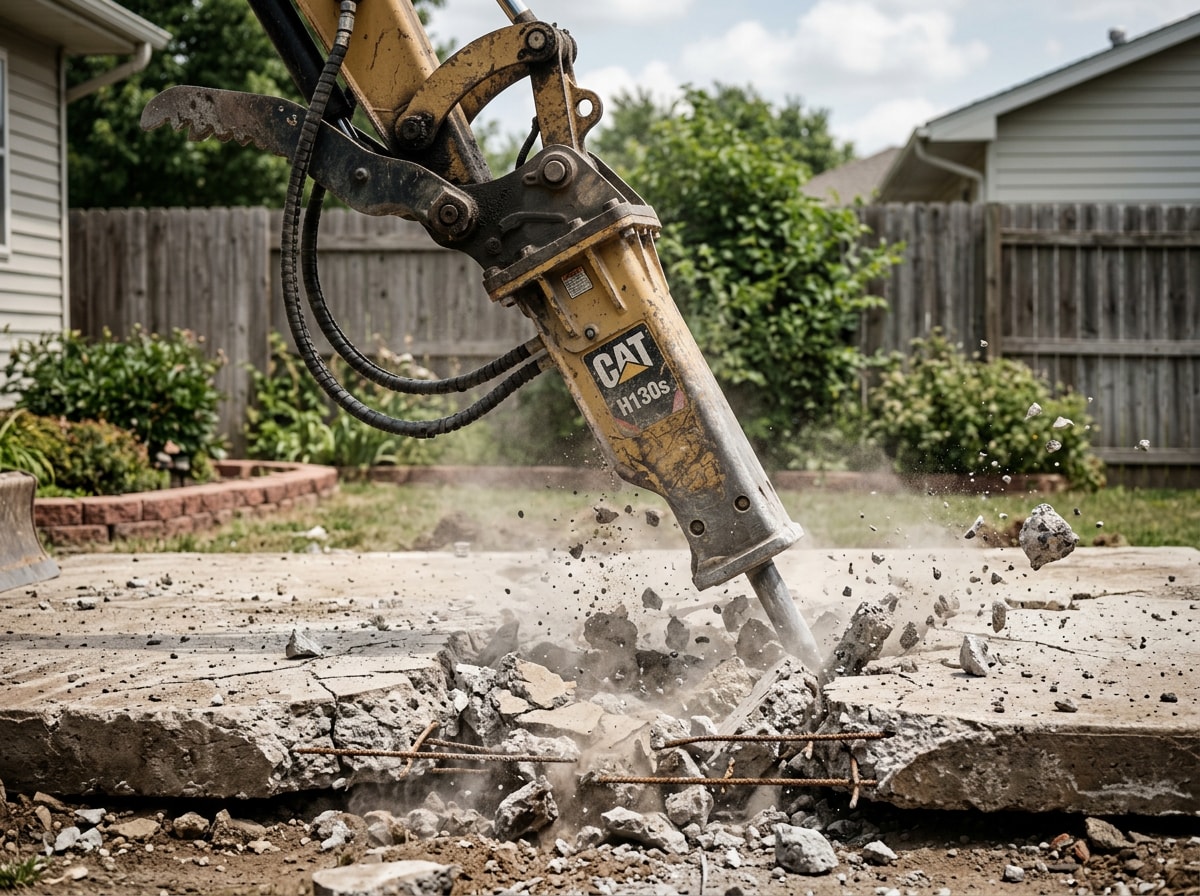
- Method selection — jackhammer for smaller or thinner slabs, hydraulic breakers for larger or thicker concrete.
- Breaking and loading — the slab comes up and debris gets loaded for haul-off.
- Grading — the site gets leveled and prepped for whatever comes next, new concrete, pavers, or landscaping.
If your plan includes paving over the area once the old concrete is gone, our guide to builders asphalt in Cooperstown, NY walks through repair-versus-replacement decisions for the next step.
Choosing the Right Concrete Demolition Contractor
Once you understand what the project involves, the next step is vetting who does the work. Not every crew with a skid steer is equipped to handle demolition correctly.
Look for:
- Demonstrated experience with similar slab sizes and conditions
- Appropriate equipment for the job, not just a rented jackhammer
- Documented safety protocols, including utility locates and dust control
- Verifiable references from recent local jobs
- Current licensing and insurance
For Oneonta and Otsego County specifically, ask to see proof of New York licensing and insurance, and request references from jobs completed nearby, not just photos from out-of-state projects. A contractor who has worked in the area understands local soil conditions, frost depth, and disposal logistics around Oneonta and Cooperstown.
Repair or Demolish? How to Decide
Minor surface cracks or small chips can often be patched or resurfaced without full removal. But major cracking that runs through the slab, visible settling or sinking, and persistent drainage problems around the concrete usually mean it's time to demolish rather than repair. Age matters too. Concrete pushing past 20-25 years with multiple issues is rarely worth patching again.
If removal clears the way for a finished lower level instead of bare slab, our basement finishing team can walk you through what's possible once the old concrete is gone.
FAQ
How much does concrete removal cost per square foot?
Most Oneonta-area projects fall between $3 and $10 per square foot, depending on access and disposal distance. See the cost table above for a breakdown by project type.
How long does it take to remove concrete?
A small slab or walkway can often be removed in a single day. Larger driveways or patios typically take two to three days, including debris hauling and site cleanup.
Do I need a permit for concrete removal in Oneonta?
It depends on the scope. A permit application and construction documents must be submitted for each structure to be demolished, and it is unlawful to engage in any demolition without first applying for and being issued a demolition permit from the City of Oneonta Code Enforcement Office. A standalone slab removal is treated differently than a structure, but confirm with code enforcement before you schedule work, since rules differ between the city, the town, and the county.
Can old concrete be recycled?
Yes. Broken concrete is commonly crushed and reused as aggregate or fill rather than sent to a landfill, an approach the EPA outlines as part of its sustainable materials management guidance for construction and demolition debris. Check our Oneonta service area page to confirm coverage before requesting a quote.
What's the difference between concrete repair and full demolition?
Repair works for surface cracks, minor chips, and cosmetic damage. Demolition is the right call once cracks run through the slab, the concrete has settled or sunk, or drainage problems keep coming back. Age and the number of prior repairs factor in too.
Can I remove concrete myself to save money?
You can for a small, unreinforced slab with no nearby utilities. For anything larger, or any slab you're not 100% sure is free of rebar, wire mesh, or buried lines, the risk of hitting something underground, or getting hurt by flying debris, usually outweighs the savings.
---
Looking for a crew that knows Otsego County frost depth, disposal logistics, and local permit rules? Visit {{SITE_URL}} to see our full range of services, or contact us directly for a free, no-obligation estimate on your concrete demolition project.
Written by the team at Fit & Finish Construction, a licensed general contractor serving Oneonta, Cooperstown, and the surrounding Southern Tier and Catskills region. Questions about your project? Reach out here.